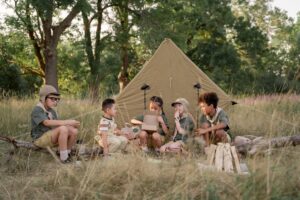

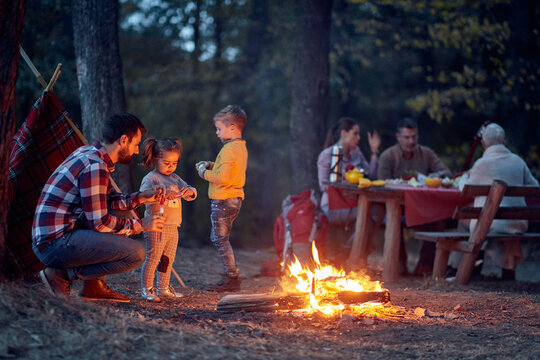
The outdoors can be a big playground for young kids when they camp. Bugs to observe, leaves to handle, rocks to gather, trails to follow, and stars to see at night. More importantly, camping provides children an opportunity to investigate without the hustle and bustle of school and screens, and without the hectic schedule.
However, for parents a first time camping with young children can be daunting. Will they sleep? Will they grow tired of it? What if it rains? Fortunately, you don’t have to make an ideal trip. Rather, go slow and follow your curiosity.
Camping can be used to teach young children outdoor skills and to develop their confidence, independence and love of nature, if handled appropriately.
Why Camping Is Great for Outdoor Activities for Young Children
Young children learn through movement, manipulation, observation and questioning. Luckily, camping provides them with lots of opportunities to do all four.
Physical activity and development is also promoted through outdoor play. So, children are able to take a walk, climb, balance, run and explore on various surfaces. There are also opportunities for language, creativity and problem solving that are generated by nature.
Additionally, the camping element is a plus. Children watch how food is cooked, how a tent operates and how families take care of a campsite. They also live in a world without a “Pause” button.Here are a few benefits of camping for young children:
- Builds confidence through new experiences
- Encourages physical movement
- Supports curiosity and creativity
- Helps children notice plants, animals, weather, and sounds
- Creates screen-free family time
- Teaches simple outdoor skills
- Encourages independence through small responsibilities
So, instead of treating camping as one big event, think of it as a collection of outdoor activities for young children. Read Why Parents Are Choosing Outdoor Experiences Over Expensive Attractions!
Start Small Before Your First Camping Trip
You don’t have to drive 5 hours out of the way to take your child for his or her first outdoor adventure. But that could be a bad first shot.
First, begin with a familiar object. Take a trip to a neighborhood park. Go for a short walk in nature. Have lunch outside. Next, have a campout in the backyard.
A night in the back yard gives children a chance to try out the fundamentals without the stress of being away from home. Can sleep in a tent, use a flashlight and hear sounds at night. If they determine there is no way you will be sleeping outside, your bed is just a few steps away.
Experts also suggest practising camping at home before going on a larger trip. So, this will help children to feel at ease and know what to expect when they go to sleep.
Choose Easy Outdoor Activities for Young Children
Young children don’t need to play sophisticated games. There is entertainment in nature.
If you are on a camping trip try some simple activities that will get kids to look around them. For instance, have them identify three different leaves. Look for birds. Count rocks. Hear various sounds. Search for animal tracks.
Make a basic nature scavenger hunt. So, make the list brief – it shouldn’t feel like homework.Try finding:
- A smooth rock
- A pinecone
- A yellow flower
- A feather
- Something that makes a sound
- A tiny insect
- A leaf bigger than your hand
And importantly, educate children to observe, not collect, living things. Respect plants, animals and natural objects.
Children may also just be allowed to play. Making a little stick house, digging in the dirt, splashing in the puddles or observing ants can be memorable experiences. Research suggests that you mix in some unstructured outdoor exploration with your plans.
Let Kids Help Around the Campsite
Camping becomes much more exciting when children feel like part of the team.
Of course, young kids should not handle knives, fires, or other dangerous equipment. However, they can still help with simple tasks.
For example, ask your child to:
- Carry their water bottle
- Roll out a sleeping bag
- Put clothes inside their backpack
- Help arrange pillows
- Choose a book for bedtime
- Hand over safe camping supplies
- Help clean up toys
- Put trash in the correct place
These small jobs give children a sense of ownership. They also teach useful skills without turning the trip into a lesson.
REI recommends giving children age-appropriate camping tasks because meaningful participation can help them feel more involved and capable.
Make Safety Part of the Adventure
Even when the trip is a fun one, safety is important.
Explain a few simple rules before exploring. Give children directions on where they can go and where they can’t go. Point out the campsite limits. Most importantly, tell them that they need to avoid water, roads, steep edges, and other animals they don’t know unless an adult is present.
Do not leave young children unsupervised by lakes, rivers, pools or other water bodies. Children should also refrain from approaching or feeding wild animals.
Other factors to consider are sun, heat, insects, and uneven ground. Ensure children drink plenty of water, use suitable sun protection measures, dress them for the weather and check for ticks when camping in tick-infested areas.
So, just a few simple guidelines will suffice. A 45-minute safety lecture next to the tent is not necessary for young children.
Follow Your Child’s Curiosity
Following interests is one of the best ways to have a child participate in an outdoor activity.
Perhaps your child is mesmerized by ants. Watch them together. Perhaps they like rocks. Allow them to compare shapes and textures. Maybe they want to hear the birds for a ten-minute period. Great. You have just found an activity.
Ask open questions:
- “What do you think made that sound?”
- “Why do you think this rock is smooth?”
- “Where do you think that ant is going?”
- “What does the tree bark feel like?”
- “Can you find another leaf like this one?”
You do not need to know every answer. Look it up together later. That makes the experience feel like discovery rather than a lesson.
Do Not Try to Make Camping Perfect
This could be the most crucial tip.
Your child may become muddy. May complain about bugs. Maybe not eat their supper. Or even sleep poorly. They might be playing with one stick all the way through and forget about the expensive toys you brought along.
That is okay.
It’s usually not picture perfect when you’re camping with little kids. Rather, try to build positive experiences with going outdoors. That’s a win if the first trip only lasts a night and there’s an abundance of snacks, laughter and exploration.
Those little things can turn into big adventures over time.
Final Thoughts on Outdoor Activities for Young Children
It doesn’t have to be a costly adventure or equipment to introduce children to nature. Begin near the house. Keep activities simple. Let kids participate. Most of all, allow them to explore!
Camping is a natural way to encourage outdoor activities for young children, to develop confidence, curiosity and family memories. Patience and realistic expectations can make the first little camping trip the start of a lifetime of a relationship with the outdoors.
Find Out How Camping Helps Children Build Confidence and Independence!
Ready for Your Next Outdoor Adventure?
Make your family’s next getaway more memorable with fun, family-friendly outdoor experiences. Visit ZooLand Family Campground to discover ways to make the most of your time outdoors and start planning your next adventure together.