
The first night in a tent can feel unfamiliar even when everyone has enjoyed the day. There are new sounds, different bedding, and less space to spread out. Sleeping comfortably in a tent starts with preparing that space before tired children are waiting to climb into it.
Zooland Family Campground offers tent sites, giving families a way to enjoy a traditional camping stay in Asheboro. Choosing suitable equipment and keeping the nighttime routine simple can make the experience more manageable.
Test the Sleeping Setup Before Traveling
Pitch the tent at home if possible and lay out the sleeping pads and bags you intend to bring. Check whether everyone actually fits alongside the belongings that need to stay inside.
A tent’s advertised capacity does not tell you how much room remains for bags or a comfortable walking space. Testing the layout can reveal that problem while there is still time to adjust.
For a broader accommodation comparison, read our RV camping versus tent camping guide before deciding which style suits your household.
Match Bedding to the Expected Overnight Conditions
Check the overnight forecast rather than planning only for the afternoon temperature. Choose sleeping equipment suitable for the expected conditions and the people using it.
Bring an appropriate sleeping pad as well as a sleeping bag. The pad provides a separate layer between your body and the ground; your usual bedroom blanket alone does not create the same setup.
The National Park Service camping equipment checklist is a useful starting point when reviewing shelter and sleeping supplies. Check manufacturer guidance for your own equipment rather than relying only on a generic packing list.
Set Up in Daylight When Possible
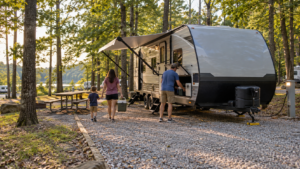
Allow enough arrival time to understand the site and pitch the tent properly. Follow campground directions about placement and ask about ground conditions if you are unsure.
Keep the sleeping area organized from the beginning. Place bedding before unloading every bag, then keep the doorway clear and lights within reach.
Review our tent site information and confirm access arrangements before booking. If someone needs a particular route to the bathhouse, discuss that requirement with the team rather than guessing from a photograph.
Keep Dry Bedding Separate From Daytime Gear
Use a dedicated bag for sleep clothing and protect bedding while you travel. Keep wet shoes, rainwear, and damp towels away from the sleeping area.
Follow the tent manufacturer’s ventilation instructions. Closing everything tightly without considering airflow can create a less comfortable interior.
Never use a grill, fuel-burning stove, or other outdoor combustion equipment inside the tent. If the weather exceeds what your equipment can handle, change the plan rather than improvising a heater.
Keep Bedtime Familiar and Realistic
Bring a familiar pillow or age-appropriate comfort item, and leave a little time to settle down. A quiet story or short conversation may help children adjust after an active day.
Show everyone where lights and footwear are kept. Plan how nighttime bathroom trips will work, including adult supervision for children.
Expect some ordinary campground sounds. Keep your own voices and lighting considerate of nearby guests, and avoid promising a completely silent night.
Make the First Night Useful for the Next Trip
Sleeping comfortably in a tent often improves as you learn which equipment and layout work for your family. Notice what helped, what stayed unused, and what needs changing next time.
Contact Zooland through our contact page with tent-site questions before reserving. A suitable site, tested bedding, and a manageable bedtime routine give the family a more comfortable starting point for the adventure.