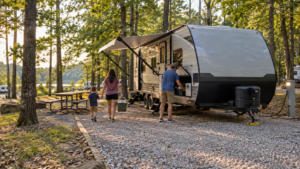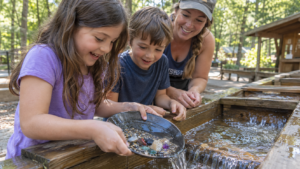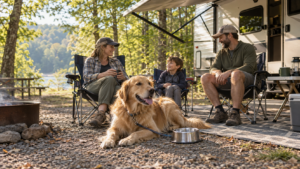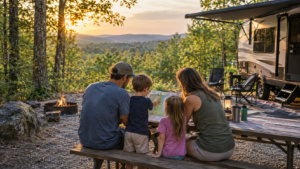

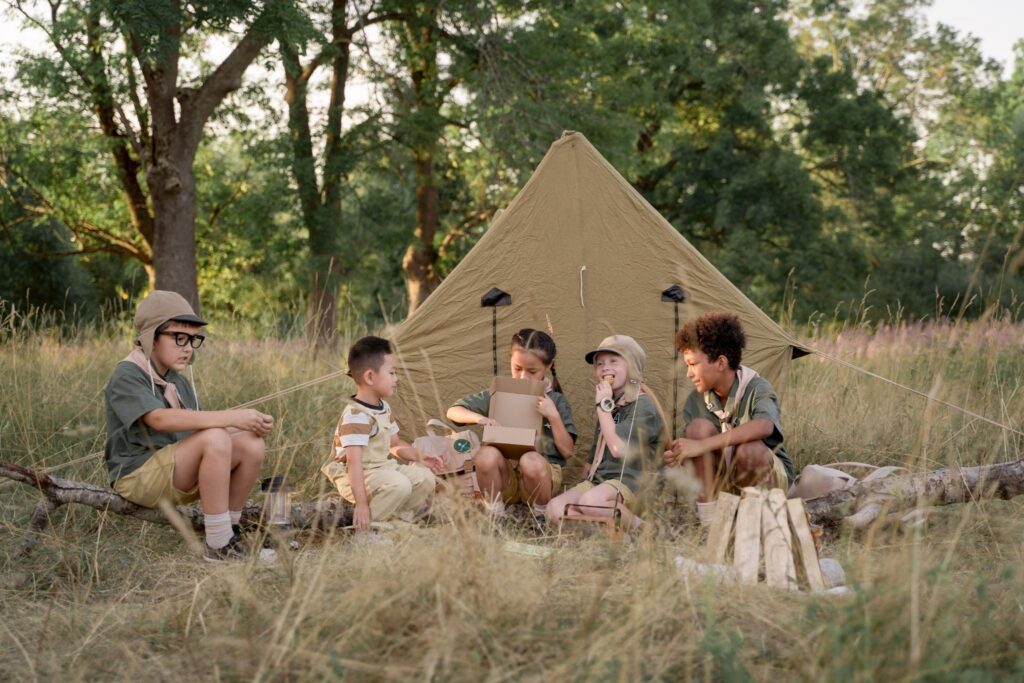
All children must have opportunities to develop. Classes teach knowledge, outdoor activities teach life skills. This is why numerous parents are discovering the benefits of camping for children. Camping is a secure place for children to take risks, problem solve and be more independent.
Furthermore, campings are an opportunity for children to get out of their comfort zone, as opposed to their daily activities. They discover through real-life experiences rather than screens. Consequently, they develop confidence that they carry with them beyond the journey.
So, let’s look at how camping improves children’s ability to become competent, resilient and confident.
Benefits of Camping for Children: New Experiences and Confidence
Firstly, children’s confidence builds as they challenge themselves and achieve success. Fortunately, camping can provide numerous opportunities for this to occur.
They can, for instance, create a tent, have a campfire under adult supervision, or go on a new hike. At first, it is not easy to do these tasks. But, as they achieve small successes they get evidence that they can manage new situations.
In addition, the American Camp Association’s research reveals that children become more confident, independent, and interested in new experiences as a result of camp. These positive changes are sometimes observed by parents even months after camp.
Most importantly, children start to have faith in their own abilities rather than relying on constant affirmations.
Benefits of Camping for Children: Independence Everyday
Surely, the freedom that comes with camping is obvious.
At home, parents will have to remind kids of all the little jobs. Children are active players rather than passive listeners when they are on a camping holiday.
They may:
- Make their own backpack.
- Organize their sleeping area.
- Help prepare meals.
- Bring their own water container.
- Be aware of personal property.
- Observe safety precautions outdoors.
Therefore, these basic tasks will introduce in the student an attitude of accountability. Moreover, little ones learn that their decisions impact their world.
Hence, they learn to make decisions, as they solve small problems on their own.
Outdoor Challenges: Problem Solving Skills
Nature has many surprises in store. Weather changes quickly. Muddy trails may form. Things need to be mended from time to time.
Luckily, children quickly learn to adapt, instead of giving up.
They could, for example:
- Take a different hiking route!
- Work with others to pitch a tent.
- Determine ways to keep supplies dry.
- Make adjustments to plans if it rains.
Thus, such occurrences enhance critical thinking. Most importantly, kids understand that they are able to keep a cool head in the storm.
Ultimately, this confidence can be transferred to the school, sports, or life in general.
Benefits of Camping for Children: Improved Social Skills
Obviously, for kids, camping is hardly ever done alone. Children have opportunities to spend time with family members or other campers. They, therefore, learn valuable social skills each day.
They learn how to:
- Share responsibilities.
- Listen to others.
- Communicate clearly.
- Resolve disagreements.
- Encourage teammates.
Naturally, camping is a face-to-face interaction which is different from online interaction. Children feel at ease when speaking with others and as part of a group.
Camping has been consistently shown to be beneficial to friendship skills, leadership, and positive peer relationships.
Nature Reduces Stress
Today’s children spend much of their time in the interior. Playtime in the outdoors is frequently substituted by screens.
But, camping changes that.
Children relax in the fresh air, open spaces and in nature. They are more mindful and present when they aren’t constantly distracted by digital devices.
They can choose to do any of the following rather than scroll through devices:
- Watch birds.
- Explore forests.
- Hear running water.
- Identify plants.
- Stare at the stars in the night.
Eventually, simple things evoke curiosity and make memories that last a lifetime.
Practical Skills Build Lasting Confidence
One of the best things about camping for kids is that they get to learn new skills that they can carry with them into the real world.
These skills include:
| Camping Activity | Skill Learned | Long-Term Benefit |
| Setting up a tent | Teamwork | Cooperation |
| Cooking outdoors | Responsibility | Self-reliance |
| Reading a trail map | Navigation | Decision-making |
| Hiking | Endurance | Resilience |
| Packing gear | Organization | Independence |
| Campfire safety | Risk awareness | Good judgment |
With each new skill, children feel more confident.
Benefits of Camping for Children: Healthy Risk-Taking
Kids must have the chance to push themselves to their limits in a secure way.
Camping offers exactly that.
Small hills, crossing streams or attempting a new outdoor activity may seem difficult initially. However, such experiences help children learn that fear is not always a sign of danger.
Healthy risk-taking, when supervised by an adult, aids children to become more resilient.
Rather than giving up on challenges, they learn to tackle them with confidence.
Camping Builds Strong Family Bonds
Camping promotes independence, but also builds family bonds.
There are fewer distractions and families spend more time talking.
Children are likely to feel comfortable in expressing feelings and asking questions around the campfire, and to share stories.
Parents will also have opportunities to reinforce children’s learning without doing everything.
Thus children are supported and trusted.
This equilibrium is key to emotional growth.
Importantly, before planning your first trip and booking a campground, here’s what you need to know!
Tips for Parents To Maximize The Benefits of Camping for Children
There’s no need for parents to plan extreme adventures. It can make a difference even on a weekend camping trip.
Here are some good tips:
- Allow children to pack their own equipment.
- Give age-appropriate responsibilities.
- Allow and encourage problem solving before intervention.
- Praise the journey rather than the destination.
- Explore nature together.
- Provide opportunity for unstructured outside activity.
First and foremost, give children the opportunity to learn through doing.
Smallest things often lead to great lessons.
Final Thoughts
Camping for kids isn’t just about fun outdoors, it’s about so much more. Camping builds self-assurance, independence, resilience, team-work and responsibility. Each challenge is an opportunity to learn.
Children bring home more than just good memories. Returning they’re convinced they can face new challenges, problem solve, and look after themselves.
Those lessons remain with them for years to come.
Are You Ready For Your Next Family Adventure?
For the family looking for good quality camping equipment and outdoors supplies, check out ZooLand Family Camp. Discover child and family friendly products that make camping safer, easier and more fun for everyone. For your next outdoor adventure, visit https://zoolandfc.com/ and begin planning today!